

 By
By ABHA is not just about digitizing files. It is rebuilding healthcare around the patient as the core data node—creating a national health operating system that enables continuity, consent, and AI-ready care.
Paper records still dominate healthcare in many parts of the world, especially in developing systems. Files tied with string, prescriptions written in rushed handwriting, and lab reports scattered across clinics are not just inefficient—they are dangerous.
When your medical history is incomplete or inaccessible, doctors treat you with partial information. That leads to repeated tests, wrong medication decisions, delayed emergency responses, and higher costs.
The solution is not “more software.” The solution is re-architecting healthcare around the patient, not the hospital. That is exactly what ABHA (Ayushman Bharat Health Account) is doing.
Direct answer to the main intent:
ABHA is the future of healthcare because it replaces paper-based, hospital-owned records with a patient-owned, interoperable, consent-driven digital infrastructure—similar to how UPI transformed banking by making identity the core layer.
Key Takeaways
| Insight | Why It Matters |
|---|---|
| Paper is now a clinical risk | Lost history = wrong treatment |
| ABHA makes patients the system | Data follows the person |
| Interoperability is the breakthrough | Hospitals finally connect |
| Consent builds trust | You control access |
| AI & telemedicine need ABHA | Future healthcare depends on it |
What ABHA Really Is
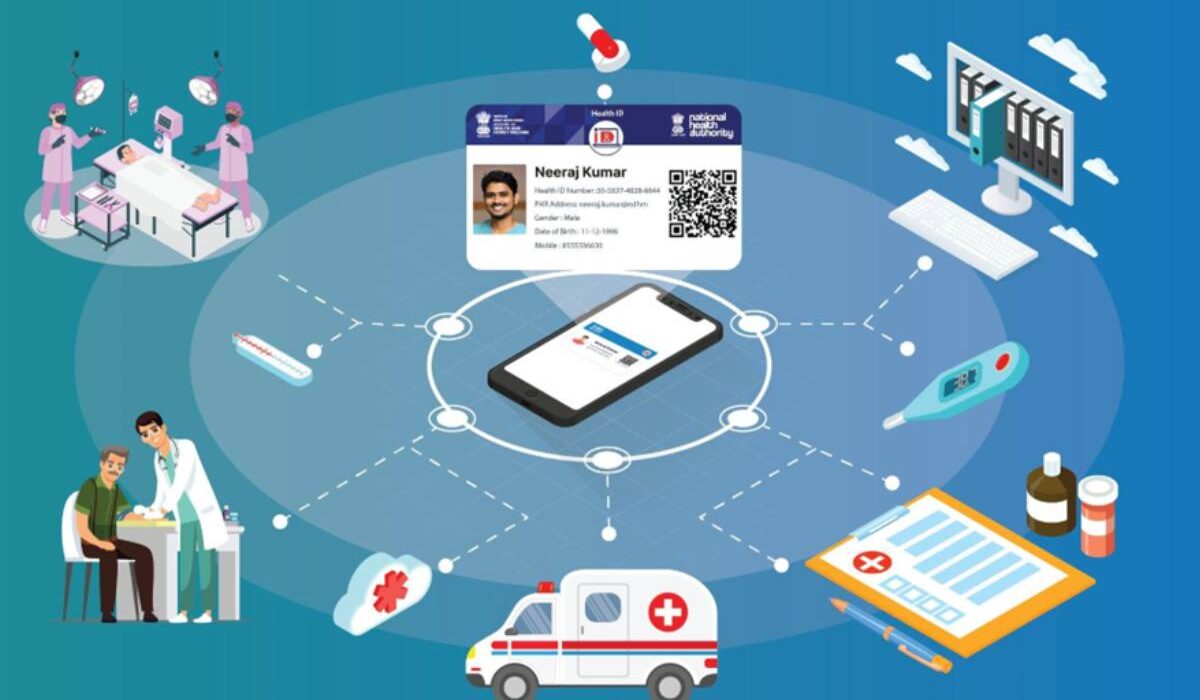
ABHA stands for Ayushman Bharat Health Account (ABHA). It is a unique digital health identity that allows individuals to link, store, and share their medical records across hospitals, labs, and doctors—with patient consent.
| Feature | ABHA System |
|---|---|
| Full Form | Ayushman Bharat Health Account |
| Type | Digital Health Identity |
| Core Role | Link & move health data |
| Ownership | Patient |
| Control Model | Consent-based |
| Scope | Nationwide |
Most people think ABHA is just “paperless records.” That’s wrong. ABHA is an infrastructure layer—a health operating system for the country.
Just like:
- Aadhaar = identity layer
- UPI = money movement layer
- ABHA = health data movement layer
Why Paper Records Are Now a Healthcare Risk
Paper records were built for a time when care was local, slow, and manual. Healthcare today is fast, mobile, and data-driven. Paper simply cannot keep up.
| Paper Problem | Real-World Impact |
|---|---|
| Lost files | Doctors treat blindly |
| Illegible notes | Medication errors |
| No data sharing | Repeated tests |
| Manual retrieval | Emergency delays |
| No analytics | Weak public health planning |
Paper doesn’t just slow care. It actively worsens outcomes.
Why Digitizing Hospitals Wasn’t Enough
Many hospitals already use Electronic Health Records (EHRs). But that didn’t solve the problem.
| Limitation of EHRs | Why It Fails |
|---|---|
| Siloed systems | One hospital can’t see another’s data |
| Vendor lock-in | Data stuck in software |
| Hospital-owned | Patient has little control |
| Low portability | Doesn’t move across cities/states |
ABHA flips the model:
Old model: Hospital → File → Patient
New model: Patient → Data → System → Care
When identity becomes the anchor, data becomes mobile.
Paper vs EHR vs ABHA — Core Comparison
| Factor | Paper Records | Hospital EHR | ABHA System |
|---|---|---|---|
| Data Owner | Hospital | Hospital | Patient |
| Portability | Very Low | Low | High |
| Interoperability | None | Limited | Built-in |
| Consent Control | None | Weak | Granular |
| Emergency Use | Poor | Partial | Strong |
| Future-Ready | None | Low | Yes |
Paper and EHRs store data.
ABHA moves data.
Consent & Privacy: The Real Risk Debate
Many people ask: Isn’t digital health data risky?
Yes—but paper is worse in practice.
| Risk Type | Paper | ABHA |
|---|---|---|
| Access logs | None | Yes |
| Patient control | No | Yes |
| Auditability | No | Yes |
| Time-bound access | No | Yes |
Paper leaks are invisible.
Digital leaks are traceable.
ABHA uses a consent architecture, aligned with global frameworks from the World Health Organization (WHO) and OECD.
How to Get an ABHA ID
Creating an ABHA ID is simple and takes only a few minutes:
- Visit the official ABHA website or use a health tech app.
- Register using your Aadhaar number or mobile number.
- Verify your details to receive your unique 14-digit ABHA ID.
- Start linking your medical records for easy and secure access.
What ABHA Unlocks (Use Cases)
| Stakeholder | Benefit |
|---|---|
| Patients | Continuity of care |
| Doctors | Faster diagnosis |
| Hospitals | Less admin work |
| Rural areas | Telemedicine with history |
| Government | Public health analytics |
Scenario 1: Emergency Care (Illustrative Example)
| Without ABHA | With ABHA |
|---|---|
| No prior history | Full medication record |
| Repeated tests | Faster treatment |
| Guesswork | Data-driven care |
Scenario 2: Rural Teleconsult
| Without ABHA | With ABHA |
|---|---|
| No lab history | Prior reports available |
| Cautious diagnosis | Confident decisions |
ABHA as the Foundation for AI & Predictive Care
AI in healthcare needs:
- Longitudinal data
- Clean identity
- Interoperability
ABHA provides the rails for:
- AI triage systems
- Preventive health models
- Population-level insights
Organizations like the World Economic Forum, WHO, and the UK NHS agree: AI only works when identity + consent + interoperability are solved first.
Price / Cost Structure
| Item | Cost |
|---|---|
| ABHA ID Creation | Free |
| Data Storage | Free |
| Record Sharing | Free |
| Hidden Costs | Digital literacy |
ABHA removes financial barriers. The real work is education and adoption.
Specialists / Global Digital Health Leaders
| Name | Expertise | Region |
|---|---|---|
| Dr. Soumya Swaminathan | Public Health & Digital Health | India |
| Dr. Eric Topol | AI in Medicine | USA |
| Dr. Rifat Atun | Health Systems & Policy | UK |
| WHO Digital Health Unit | Global Health IT | Global |
Reviews (Stakeholder Sentiment – Qualitative)
| Group | Typical Feedback |
|---|---|
| Patients | “Easier access, less paperwork” |
| Doctors | “Better clinical context” |
| Hospitals | “Improves efficiency” |
| Policy Experts | “Foundational infrastructure” |
Country-Wise Digital Health Models
| Country | Digital Health ID | Similar to ABHA? |
|---|---|---|
| India | ABHA | Yes (Core model) |
| UK | NHS Number | Partial |
| Estonia | e-Health ID | Yes (Advanced) |
| Singapore | HealthHub | Partial |
| Australia | My Health Record | Partial |
India, with ABHA, is now in the top tier of patient-centric digital health systems globally.
Who This Article Is For
| For | Not For |
|---|---|
| Patients | Only registration guides |
| Doctors | Anti-digital views |
| Policymakers | Tech-only thinking |
ABHA is infrastructure. Infrastructure enables good care—it does not replace ethics, training, or compassion.
Final Thought
With initiatives like ABHA, India is stepping into a new era of digital healthcare. As more hospitals, clinics, and labs integrate with ABDM, managing health records will become effortless. No more lost files, no more repeated tests, and no more confusion.
If you haven’t created your ABHA ID yet, now is the time! Take control of your family’s health records and experience the convenience of digital healthcare today.
Paper records belong to a world where care was slow and local.
ABHA belongs to a world where care is connected, mobile, and intelligent.
Paper → Storage
EHR → Digitization
ABHA → Healthcare Infrastructure
That is why ABHA is not just the future of healthcare in India.
It is the foundation of it.
