

 By
Most foot pain is temporary. You push through a long day, wear the wrong shoes, or overdo it on a weekend hike, and your feet complain for a day or two before returning to normal. That kind of discomfort is part of life, and it tends to resolve on its own with a little rest.
But some foot pain does not follow that pattern. It lingers longer than it should, keeps coming back in the same spot, or comes with other changes you have not seen before. That is a different situation, and recognising the difference matters.
Here is a straightforward guide to the signs that suggest your foot pain has moved past normal soreness and deserves a closer look.
The Difference Between Soreness and a Real Problem
Normal foot soreness usually has a clear cause: you stood for hours, tried a new workout, or wore shoes you know are not great for long days. That kind of pain is diffuse, meaning it is spread across the foot rather than concentrated in one specific spot, and it tends to improve noticeably within a day or two of rest.
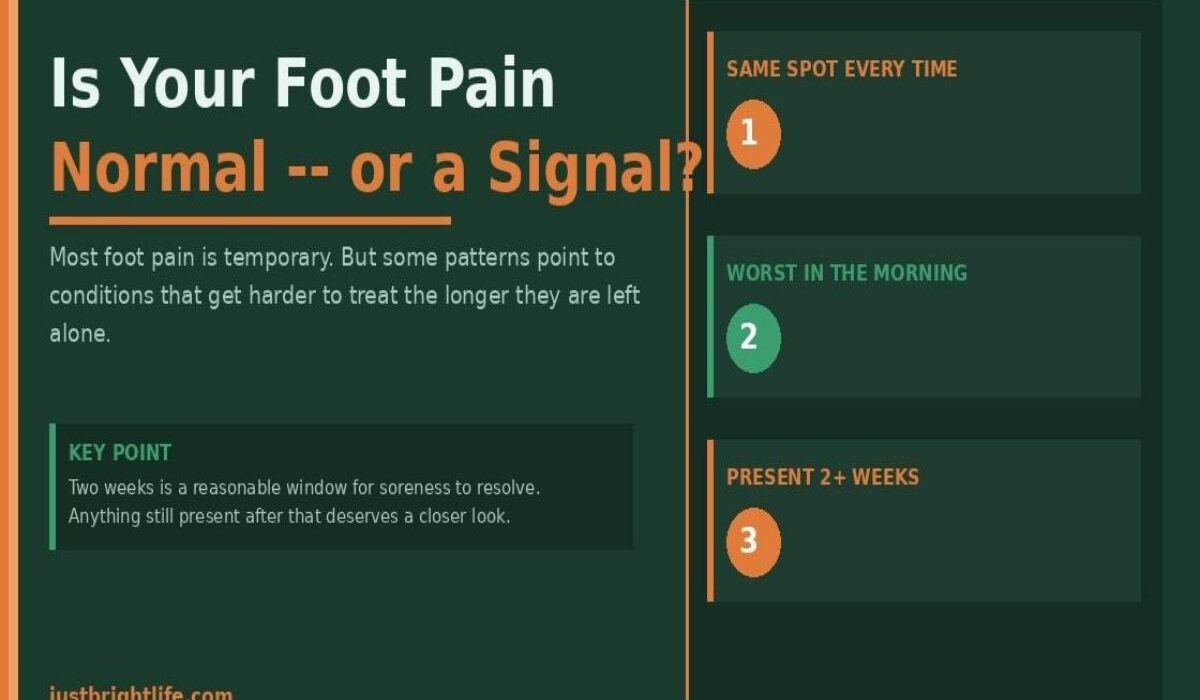
Foot pain that signals something more tends to look different. It is often localised, meaning you can press your finger to one specific area and reproduce the exact pain. It follows predictable patterns, such as being worst first thing in the morning, or flaring up every time you reach a certain activity level. And critically, it does not go away with the rest that would normally clear things up.
A two-week window is a reasonable benchmark. Most genuine soreness from overuse or minor strain resolves within that time. Anything that has been present for more than two weeks, keeps returning after brief improvement, or is getting gradually worse rather than better falls into the category of early warning signs worth taking seriously.
Specific Patterns That Are Worth Noticing
Some types of foot pain have distinctive patterns that can tell you quite a bit about what is going on before you ever see a specialist.
Sharp heel pain on your first steps in the morning. If your heel feels fine during the day but is painful the moment you put weight on it first thing in the morning, then gradually eases over the first ten to fifteen minutes of walking, that is a very specific pattern. It is the hallmark of plantar fasciitis, an inflammation of the thick band of tissue running along the bottom of your foot. The good news is that it responds well to targeted treatment. The less good news is that it tends to get worse the longer it goes unaddressed.
Pain that appears consistently at the same activity level. If you can walk a short distance comfortably but pain reliably appears once you have been on your feet for a certain amount of time or a certain distance, that pattern suggests your foot is struggling with load over time rather than simply being sore. This can indicate structural issues with the arch, problems with footwear, or conditions that need proper evaluation.
Numbness, tingling, or a burning sensation. These sensations in the foot or toes are not typical soreness. They usually point to nerve involvement, whether from compression in the foot itself, from the lower back, or from systemic conditions like diabetes. They are worth reporting to a doctor or podiatrist sooner rather than later.
Pain that wakes you up at night. Foot pain that is bad enough to interrupt sleep is unusual. Most musculoskeletal pain settles when you take weight off the foot. Pain that persists or worsens at rest can indicate circulation problems, inflammatory conditions, or other issues that need investigation.
Any visible change to the foot or toes. Swelling that does not go down overnight, changes in skin colour, sores that are slow to heal, toenail changes, or any new lump or structural change in the foot are all signs that something has shifted. These deserve professional attention rather than a wait-and-see approach.
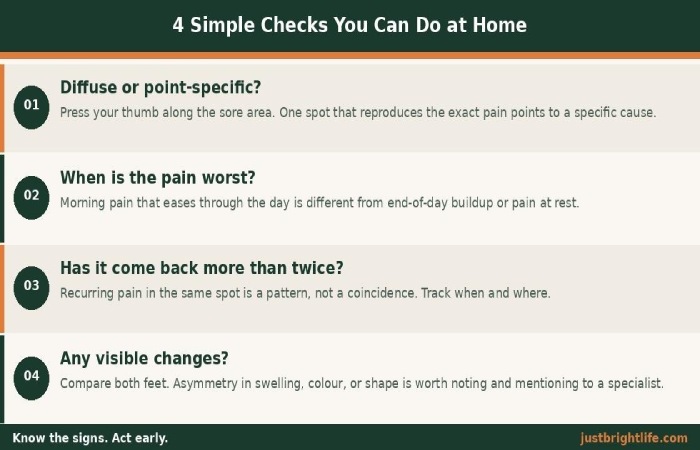
Four quick checks you can do at home to help tell the difference between normal soreness and something that needs professional attention.
When to Stop Managing It Yourself
There is nothing wrong with applying basic self-care to foot pain: rest, ice, a supportive shoe swap, some gentle stretching. For everyday soreness, that is often all it takes. But there are some situations where self-management is not the right approach.
See a podiatrist if your foot pain has been present for more than two weeks without clear improvement, if it keeps returning after brief periods of feeling better, if you notice any of the sensations described above such as numbness or burning, if there are visible changes to the foot you cannot explain, or if the pain is affecting how you walk or disrupting your daily routine.
You should also seek care sooner if you have diabetes, poor circulation, or any condition that affects your immune system. These factors change how foot problems behave and how quickly minor issues can become serious ones.
If you are not sure whether what you are experiencing warrants a visit, the foot and ankle specialists at Beaver Valley Foot Clinic offer a comprehensive range of evaluation and treatment options covering both common and complex foot conditions. Getting a professional read on what you are dealing with is always a better use of time than months of self-management that is not quite working.
What You Can Do Right Now
If your foot pain falls into the normal-soreness category, a few consistent habits can help prevent it from becoming something more.
- Choose footwear with proper arch support and cushioning, particularly for activities that keep you on your feet for long periods.
- Stretch your calves and the arch of your foot regularly, especially before your first steps in the morning or before exercise.
- Pay attention to when pain appears and what makes it better or worse. That pattern information is genuinely useful for any professional you might see.
- Do not push through pain that follows a consistent pattern, particularly if it is heel or arch pain that mirrors the plantar fasciitis description above.
Your feet tend to give you information before problems become serious. Building a few simple habits that support long-term health is one of the most effective things you can do to keep minor aches from escalating into something that requires much more intervention.
Paying Attention Is the First Step
The line between normal foot soreness and a genuine problem is not always obvious, but the patterns described here give you a useful framework. Temporary soreness has a clear cause, resolves with rest, and does not concentrate in one specific spot. Pain that keeps returning, follows consistent patterns, or comes with other changes is telling you something different.
You do not need to become an expert on foot anatomy. You just need to notice when pain stops following the normal soreness pattern and act on that observation rather than waiting to see whether it eventually goes away on its own.