

From Cells to Cures
Medical science has been tearing it up over the past few decades—breakthroughs that would’ve sounded like sci-fi not long ago. Researchers now have the gear to dive into diseases at the molecular and cellular level, spotting things that used to stay hidden. Getting health down to this nitty-gritty scale isn’t just neat—it’s the secret sauce for cooking up treatments and prevention plans that actually stick. Diseases often kick off with tiny cellular hiccups, and nabbing those early can turn the tide for patients. It’s like catching a leak before the whole pipe bursts.
New tech’s letting scientists zero in on individual cells instead of just eyeballing a tissue mash-up. That shift’s lit a fire under fields like cancer, brain research, and immune studies. Pinpointing those subtle cell differences is cracking open how diseases sneak in. It’s the bedrock for personalized medicine—treatments tweaked to your DNA, not some off-the-shelf fix. Tracking a cell’s journey over time? That’s flipping the medical playbook, dishing out fresh hope for folks battling tricky conditions.
Overview: From Cells to Cures
| Aspect | Details |
| Core Idea | Medical science is shifting toward understanding diseases at the cellular and molecular level |
| Key Advancement | Ability to detect tiny biological changes early |
| Importance | Early detection leads to better prevention and treatment outcomes |
| Analogy | Like fixing a small leak before it becomes a major problem |
| Impact | Improves diagnosis, treatment precision, and patient survival rates |
The Traditional Model vs. the Cellular Approach
Historically, medicine has been reactive. A patient experiences symptoms, seeks care, receives a diagnosis, and then undergoes treatment.
Traditional Healthcare Model
| Aspect | Description | Limitation |
| Focus | Organs and symptoms | Misses root causes |
| Timing | Reactive | Late intervention |
| Treatment | Standardized | Not personalized |
| Data Use | Limited | Underutilized biological data |
Emerging Cellular-Based Model
| Aspect | Description | Advantage |
| Focus | Cells, genes, and molecular pathways | Identifies root causes |
| Timing | Preventive and predictive | Early intervention |
| Treatment | Personalized medicine | Higher effectiveness |
| Data Use | Genomics, AI, biomarkers | Deep insights |
Diseases do not begin at the organ level—they begin at the cellular level. By the time symptoms appear, cellular dysfunction has often been progressing for years.
Unveiling Cellular Complexity
| Aspect | Details |
| Traditional Limitation | Older methods analyzed mixed cell populations, hiding differences |
| Modern Approach | Single-cell sequencing studies individual cells |
| Key Benefit | Reveals cellular diversity and rare cell types |
| Scientific Value | Identifies unique gene expression patterns |
| Outcome | Helps create accurate disease models and targeted therapies |
| Example | Detecting a rare harmful cell type driving disease |
Estimated Global Costs
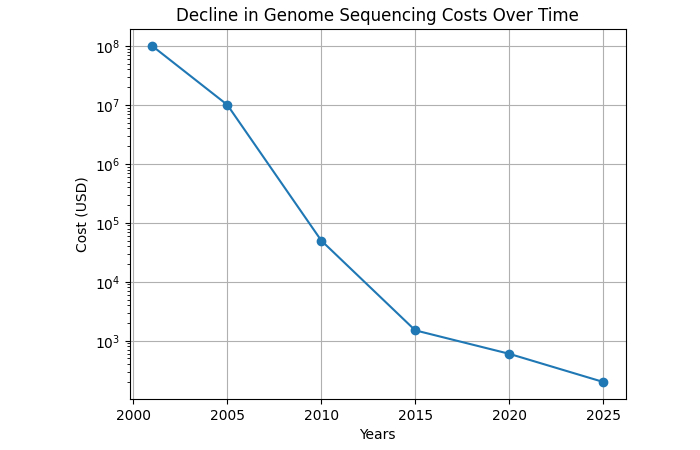
While advanced healthcare technologies are transformative, cost remains a barrier.
| Service | Price Range (USD) |
| Genome Sequencing | $100 – $1,000 |
| Biomarker Testing | $50 – $500 |
| Gene Therapy | $100,000+ |
| AI Diagnostics | $10 – $200 per scan |
Where to Access
| Region | Availability |
| USA & Europe | Widely available |
| Asia | Rapidly expanding |
| Developing Countries | Limited but growing |
Costs are decreasing rapidly, making advanced healthcare more accessible over time.
Transforming Cancer Research
| Aspect | Details |
| Challenge | Tumors contain multiple cell types with different mutations |
| Old Method Issue | Averaging tumor data masked important variations |
| New Insight | Cellular analysis tracks tumor evolution |
| Key Advantage | Identifies resistant or aggressive cancer cells |
| Clinical Impact | Enables targeted therapies and reduces treatment resistance |
| Example | Targeting a specific cancer cell cluster in a lung tumor |
Advancing Neurological Insights
| Aspect | Details |
| Complexity | Brain contains diverse cell types (neurons, glial cells) |
| Past Limitation | Bulk analysis missed cell-specific behavior |
| Modern Approach | Studying individual brain cells |
| Key Discovery | Gene changes linked to neurological diseases |
| Impact | Early detection and potential regeneration strategies |
| Example | Identifying early neuron dysfunction in Alzheimer’s disease |
Enhancing Immunological Understanding
| Aspect | Details |
| System Overview | Immune system consists of diverse specialized cells |
| Research Advancement | Single-cell analysis of immune cells |
| Key Insight | Understanding how immune cells respond to threats |
| Benefit | Improved vaccines and immunotherapies |
| Personalization | Treatments tailored to individual immune responses |
| Example | Customized therapy for autoimmune disorders |
Personalizing Medical Treatments
| Aspect | Details |
| Core Concept | Treatments based on individual genetic profiles |
| Enabling Factor | Cellular-level insights into mutations and gene behavior |
| Key Benefit | Higher effectiveness with fewer side effects |
| Shift | From one-size-fits-all to precision medicine |
| Clinical Impact | Better outcomes for complex and rare diseases |
| Example | Cancer drugs tailored to a patient’s tumor genetics |
Overcoming Current Challenges
| Aspect | Details |
| Technical Challenge | Errors during amplification of small samples |
| Data Challenge | Massive and complex datasets require advanced analysis |
| Cost Issue | High cost of advanced cellular technologies |
| Accessibility | Limited use in routine clinical settings |
| Ongoing Solutions | Development of better tools and cost reduction |
| Future Outlook | Wider adoption as technology becomes affordable |
Future Directions in Healthcare
| Aspect | Details |
| Vision | Understanding diseases at their smallest biological level |
| Key Opportunity | Early detection before symptoms appear |
| Technological Growth | Continuous improvement in cellular analysis tools |
| Healthcare Impact | More accurate diagnosis and personalized treatments |
| Long-Term Benefit | Improved quality of life and survival rates |
| Example | Detecting cancer years before visible symptoms |
The Role of Artificial Intelligence in Modern Health
Artificial intelligence (AI) is accelerating the transition from cells to cures by processing vast amounts of biological data.
| Application | Function | Impact |
| Drug Discovery | Identifies targets | Faster development |
| Diagnostics | Image & data analysis | Higher accuracy |
| Predictive Analytics | Risk forecasting | Preventive care |
AI enables pattern recognition at a scale impossible for humans, making it a cornerstone of modern medicine.
Regenerative Medicine and Cellular Therapies
One of the most exciting developments is the ability to repair or replace damaged cells.
| Therapy Type | Description | Example |
| Stem Cell Therapy | Regenerates tissues | Bone marrow transplant |
| Gene Therapy | Fixes genetic defects | CRISPR-based treatments |
| Immunotherapy | Enhances immune response | Cancer treatments |
These therapies represent a shift from managing disease to potentially curing it.
Comparing Old vs. New Healthcare Paradigms
| Dimension | Traditional Model | Cells-to-Cures Model |
| Approach | Reactive | Proactive |
| Focus | Symptoms | Root causes |
| Tools | Basic diagnostics | Genomics, AI, biomarkers |
| Outcome | Disease management | Disease prevention & cure |
Alternatives and Complementary Approaches
Even as advanced medicine evolves, traditional health practices still play a role.
| Approach | Strength | Limitation |
| Conventional Medicine | Evidence-based | Reactive |
| Functional Medicine | Holistic | Less standardized |
| Preventive Care | Cost-effective | Requires behavior change |
Pros and Cons of the Cells-to-Cures Model
Pros
- Early detection of diseases
- Personalized treatments
- Potential for cures rather than management
- Data-driven decision-making
Cons
- High initial costs
- Data privacy concerns
- Requires advanced infrastructure
- Ethical challenges in genetic editing
Final Verdict
The transition from symptom-based care to cellular-level understanding represents one of the most important shifts in medical history. By integrating genomics, biomarkers, artificial intelligence, and regenerative therapies, healthcare is becoming more predictive, personalized, and preventive. While challenges such as cost and accessibility remain, the trajectory is clear: the future of medicine lies not in reacting to disease, but in understanding and correcting it at its origin—the cell.