

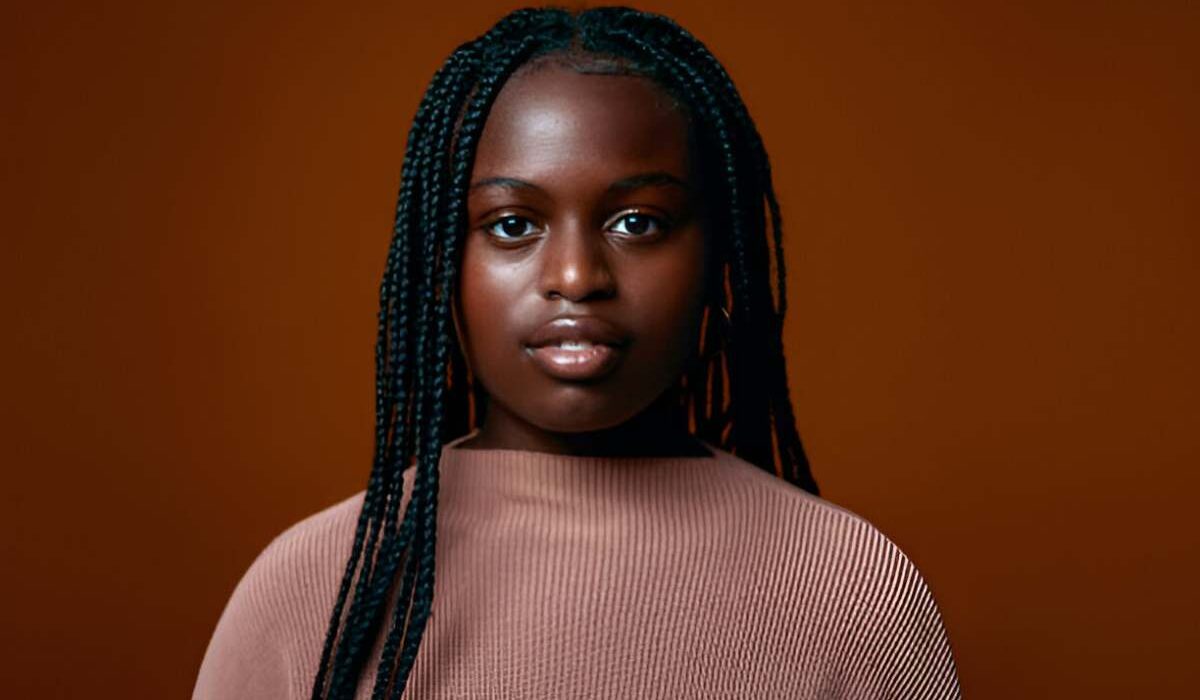
Let me be straight with you. The half up half down braids black girl is not just a cute hairstyle you scroll past on Instagram and forget five seconds later. This look has history. Real history. It’s tied to memory, survival, beauty, and the way Black women have always found ways to express who we are, even when the world tried to shrink us. When you wear this style, you’re not just doing your hair. You’re stepping into something bigger than you.
I remember sitting between my aunt’s knees as a kid while she braided my hair on a Sunday afternoon. The sun was coming through the window, my grandmother was humming in the kitchen, and I was half asleep from the tug of the comb. Back then, I didn’t have the words for it, but that was culture being passed down. That was love. That was identity.
The half-up, half-down braid sits right in the middle of structure and freedom. You pull part of your hair up, claiming your crown, and let the rest flow, soft and moving. It’s protective, but it’s also expressive. It says, “Yeah, I’m polished, but I’m still me.”
And here’s the thing. This style isn’t some new trend that popped up because a celebrity wore it once. It’s a living, breathing art form. It comes from a long line of braided traditions that go back to African empires, where hair showed your age, your family, your role in the community. Your head was like a biography. People could read your life story just by looking at your braids.
From Ancient Roots to Modern Reclamation
Hair as History in Africa
Before borders and boats and chains, braiding was already a language. In places like what we now call Nigeria, Ethiopia, Ghana, and Senegal, hairstyles told people who you were without you having to say a word. The crown of the head mattered. It was spiritual. Powerful. That’s why so many traditional styles focus upward, toward the sky.
Braids as Survival and Resistance
Then enslavement happened. And look, this part is heavy, but it matters. Black people were stripped of almost everything, but we held on to hair. Braids protected the scalp, preserved memory, and in some stories, even carried secrets. Routes. Seeds. Hope. Braiding became survival. Quiet resistance. A way to stay human in a system designed to erase humanity.
The Political Power of Natural Hair
Fast forward to the Civil Rights and Black Power eras. Natural hair came back loud and proud. Afros. Braids. Locs. Styles like the half up, half down braid became statements. Not just “this is my hair,” but “this is my identity.” Wearing textured, braided styles was a way to say, “I don’t need to look like you to be beautiful.”
Celebrities, Visibility, and the CROWN Act
Now we’re in the modern era. Celebrities like Janet Jackson, Beyoncé, and Issa Rae didn’t just wear braids. They normalized them on global stages. They made them visible in spaces that used to shut Black hair out. And yeah, there’s been tension. Cultural appreciation versus appropriation. People loving the look but not respecting the roots. That’s why things like the CROWN Act matter. Because our hair is not a costume. It’s culture.
The Braiding Space: Where Hair Meets Healing
The Salon and the Kitchen Table
If you’ve ever sat in a chair getting your hair braided for hours, you already know this isn’t just about beauty. It’s therapy, It’s community, and it’s storytelling.
Salons, kitchens, and living rooms turn into safe spaces. You talk about your life, job, and your heartbreaks. Your wins. You laugh. You vent. Sometimes you cry. And all the while, hands are working magic on your head.
Knowledge Passed Hand to Hand
My grandma used to say, “Sit still, this part matters.” And she wasn’t just talking about the braid. She meant the moment. The connection. The way knowledge gets passed down without a textbook. Somebody shows you how to part. How to oil the scalp. How to be patient with your own head.
Braiding as Meditation
There’s something meditative about the rhythm of braiding. Over. Under. Pull. Repeat. It slows everything down. You walk out lighter than you walked in.
Why This Style Actually Protects Your Hair
How the Half Up Half Down Style Reduces Damage
People throw around the phrase “protective style,” but let’s talk real. The half up, half down braid works because it spreads out the tension. Your ends, which are the oldest and most fragile parts of your hair, get tucked and lifted. Meanwhile, part of your scalp stays accessible. You can still moisturize. Still breathe. Still care for your hair instead of hiding it.
Using the Style for Hair Growth
If you’re on a growth journey, this style can be your best friend. You prep your hair before braiding. Clean it. Deep condition it. Don’t rush that part. Then you keep moisture in both sections. Light sprays. Sealing oils. Nothing heavy and greasy.
Scalp Care While Wearing Braids
Scalp care matters too. You can cleanse with diluted shampoo or witch hazel. Hydrate with aloe sprays. Massage your head with light oil like you’re saying thank you to it.
The Real Technique Behind a Flawless Look
Blending the Up and Down Sections
A good half up, half down braid doesn’t just happen by accident. There’s skill behind it. You’ve gotta blend the “up” and “down” sections so they look seamless, not like two different hairstyles fighting each other.
Managing Weight and Tension
Weight matters too. If you’re using added hair, you can’t dump all that tension on one braid and call it a day. You spread it out. Anchor it properly. Otherwise, hello headaches and tender scalp.
Choosing the Right Braid Foundation
Your base matters. Box braids give you fullness. Cornrows give you structure. Twists give you softness. The foundation decides how the whole style moves.
Fixing Common Braid Problems
Frizz at the crown? Mousse and a silk wrap. Slipping braids? Secure those roots. Tension bumps? Ease up and soothe the scalp. Your head is not a battlefield.
Night Care and Longevity
At night, you wrap it. Not sometimes. Every night. Silk or satin. Protect your investment.
How the Style Grows With You
Youthful and Playful Versions
When you’re young, it’s playful. Beads. Color. Cute accessories.
Mature and Elegant Adaptations
When you’re grown, it gets sleeker. Cleaner lines. Less noise, more elegance.
Corporate-Friendly Styling
In corporate spaces, you can wear it smooth and polished. Neutral tones. Soft shine. Still you, just tailored for the room.
Special Occasion Glam
For weddings, galas, graduations? That’s when you bring out the cuffs, the jewels, the flowers. The drama. The crown energy.
Navigating the World in Your Hair
For Stylists: Cultural Respect Matters
If you’re a stylist, especially a non-Black stylist, listen up. Do the homework. Respect the culture. Learn the science of textured hair. And always center your client’s voice.
For Wearers: Standing in Your Identity
If you wear this style in spaces that don’t always understand it, stand firm. You don’t owe anyone access to your head. Or an explanation for your identity.
Your hair is not just a style, it’s a statement.
The Future of Black Braiding
Digital Community and DIY Culture
Social media has taken our traditions global. TikTok. YouTube. DIY braiders everywhere. People learning, sharing, preserving.
Preservation and Protection
Historians and artists are documenting these styles. Lawmakers are protecting them.
Innovation and What’s Next
Sustainable hair materials. Tech-based scalp care. Even digital art is inspired by braids.
But no matter how futuristic it gets, the heart of it stays the same.
The half-up, half-down braid is legacy in motion. You’re not just wearing a hairstyle. You’re wearing a story.