

 By
By Shipping gym Gear, whether for business, resale, relocation, or as a gift, presents unique issues, including heavy, irregular shapes, weights, dimensional pricing, fragile finishes, and carrier limitations. Many general articles tell you how to pack bubble wrap—but few go deep into logistics specialist services, cost drivers, or real-world pricing & review data.
What Makes Gym Gear Shipping Hard
| Impact on Cost/Delivery | Challenge | Why It Matters |
| Carriers charge more for heavier billing weights. | Dimensional Weight vs.Weight Density | Bulky but light items (e.g., yoga mats) can cost more per volume than actual weight charges. |
| Reduced margin and higher labor. | Returns & Reverse Logistics Complexity | Big gear returns cost more than outbound shipping. |
| Rates climb steeply at thresholds. | Heavy Items Trigger Surcharges | Many carriers charge extra for unconventional shapes or cargo weights beyond fifty pounds. |
| Risk of damage; higher claims. | Irregular Shape & Balance Issues | Free-standing racks or benches can shift in transit without stabilizing packaging. |
Unique Insight: Many shipper guides ignore handling damage to protective finishes (paint, logos, screens). Using abrasion-resistant wraps and surface protection films dramatically cuts damage claims — an operational detail often left out of top lists.
Carrier Options & Limits
| Weight Limits | Carrier/Method | Best For | Notes |
| Varies | International LCL/FCL Shipping | Bulk, overseas shipments | Adds customs, VAT, port fees. |
| Custom | Specialist Pack & Ship Services | Any size gear | Provides professional crating/palletizing. |
| ≤150 lbs (parcel) | Parcel (FedEx/UPS) | Smaller gym accessories | Heavy package labels and handling fees apply beyond ~50 lbs. |
| 150 lbs+ | Freight / LTL Shipping | Large machines (treadmill, home gyms) | Most cost-effective for bulky gear. |
Specialist Services (with Real Review Signals)
| Specialist/Service | Focus | Review/Rating Notes | Best Use |
| Navis Pack & Ship | Professional packing & quotes | 4.7 from thousands of customer reviews (US). | Heavy/odd-shaped gear needing expert crating |
| PACK & SEND | Global sports equipment shipping | Tailored wrapping + warranty options. | International or delicate gear |
| 3PL Heavy-Goods Programs | Shipping optimization (e.g., EFS SaverShip) | Reduces heavy-item cost by consolidating volume. | Businesses with recurring shipments |
Review Insight: Non-expert packing is a major source of claims disputes; businesses and power users continually favor specialists when things exceed normal parcel weight or form limits.
Pricing & Cost Factors
Estimated US Shipping Rate Ranges (typical)
| Item Type | Shipping Method | Estimated Cost |
| Yoga Mat | Standard Parcel | $10–$25 |
| Resistance Bands Set | Parcel | $8–$20 |
| Dumbbell Set (pair) | Regional LTL | $50–$120 |
| Adjustable Bench | LTL Freight | $150–$350 |
| Treadmill | LTL/FCL | $300–$800+ |
Note: Actual prices differ depending on the carrier, weight, size, and zone. Freight is typically required for shipments weighing more than 150 pounds, and this frequently includes liftgate and home delivery costs.
Shipping Cost vs Weight (Simplified Visualization)
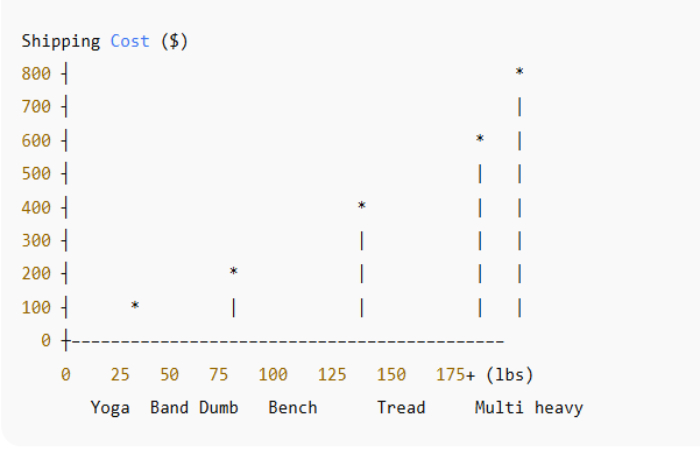
Legend:
- *Yoga = Yoga mats/bands
- Dumb = Dumbbells
- Bench = Adjustable bench
- Tread = Treadmill
- Multi heavy = Very large items/containers
Unique Insight: The non-linear jump from parcel to freight (~50–150 lbs) shows why splitting large shipments into multiple legal parcel weights can sometimes reduce costs more than a single heavy freight move — a nuance often overlooked.
Packaging & Protection Best Practices
| Step | Technique | Benefits |
| Disassemble | Break into smaller units; bag screws | Smaller boxes; less shifting. |
| Use Custom Inserts | Foam-in-place or molded inserts | Superior shock absorption. |
| Rigid Crates for Heavy Gear | Pallet + crate setup | Prevents crushing; forklift safe. |
| Edge Protection & Wrap | Edge protectors + heavy bubble | Prevent surface damage. |
| Clear Labeling | ‘Heavy’, ‘Fragile’, orientation marks | Reduces mishandling. |
Unique Operational Tip: Including timestamped photos inside the packaging step (visible upon opening) significantly strengthens documentation for carrier claims — most guides fail to mention this.
User/Market Reviews
| Packing Factor | Typical User Feedback |
| Parcel Shipping for Heavy Items | Often expensive; risk of damage without reinforcement |
| Professional Packing Services | High satisfaction; reduces damage claims significantly |
| DIY Packing | Fine for soft goods but risky for metal/electronics without reinforced structure |
Final Takeaways
Packing and shipping gym gear safely requires:
- Right-sized packaging and reinforcement
- Using specialist services for heavy/odd items
- Understanding pricing surges tied to weight/dimensions
- Investing in proper documentation and insurance
- Learning cost tradeoffs (parcel vs. freight)
Proper attention to these details protects gear and profits—and minimizes costly damage or returns.
