

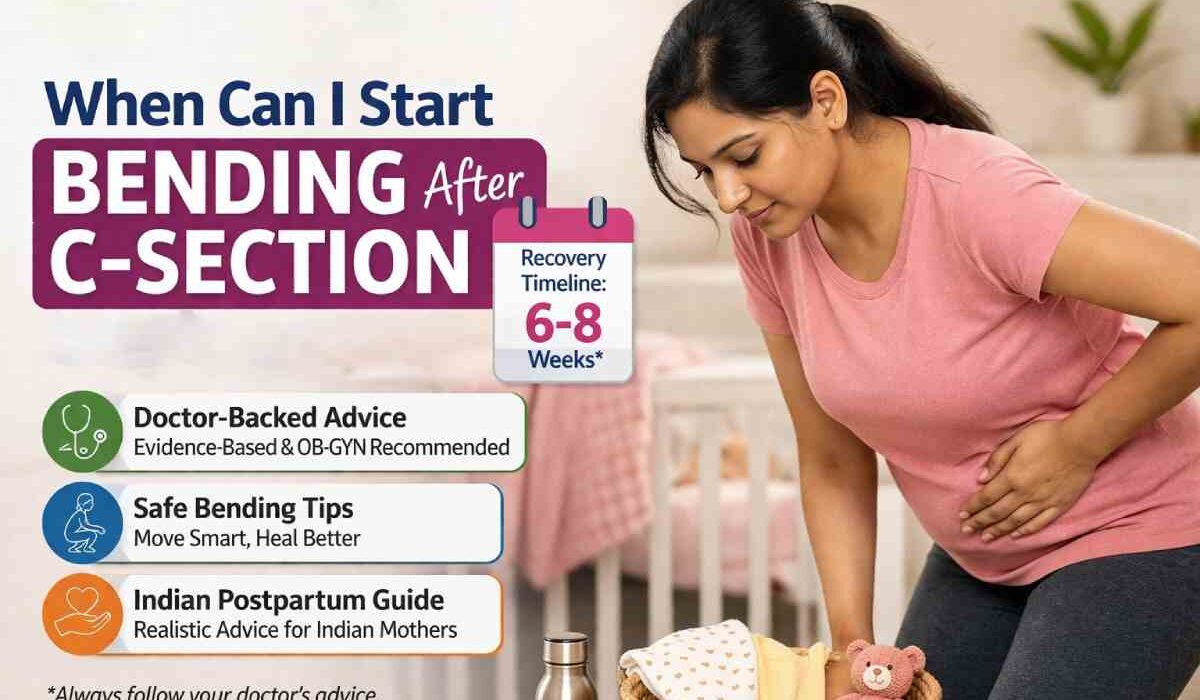
A cesarean section (C-section) is major abdominal surgery, not just childbirth. One of the most common questions new mothers ask is: “When can I start bending after a C-section?” If you have had a Cesarean section (C-section) in India, the advice you hear can be confusing. Your mother-in-law might tell you to rest completely. A fitness influencer on Instagram might show you stretches. Your doctor likely gave you a generic “wait 6 weeks” line.
Light bending may begin after 2–3 weeks, but full bending should wait 6–8 weeks, depending on healing and medical advice. However, recovery depends on incision healing, pain tolerance, muscle repair, and postnatal care practices common in India. This guide goes deeper—combining medical evidence, OB-GYN recommendations, and practical Indian postpartum realities.
What Happens to Your Body After a C-Section?
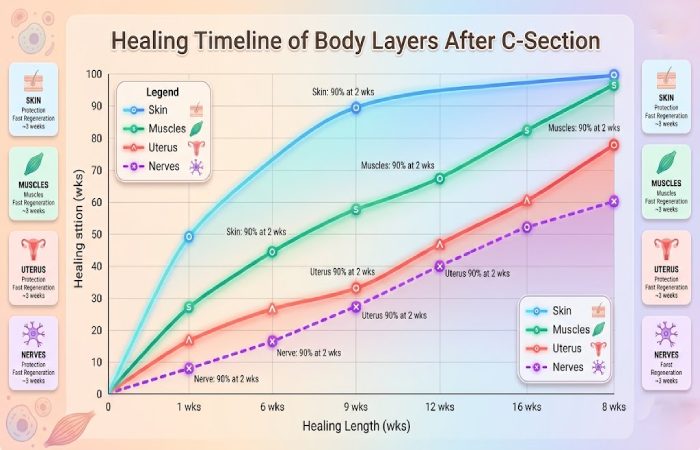
A C-section involves multiple layers of surgical intervention:
| Layer Affected | What Happens | Recovery Time |
| Skin | External incision | 2–3 weeks |
| Muscles | Abdominal separation | 6–8 weeks |
| Uterus | Surgical incision | 6–12 weeks |
| Nerves | Temporary damage | Variable |
Even if your external stitches look healed, internal tissues are still fragile—which is why bending too early can cause complications.
When Can You Start Bending After a C-Section?
| Time After C-Section | Bending Status | What You Can Do |
| 0–2 weeks | Avoid bending | Only gentle movements |
| 2–3 weeks | Minimal bending | Slight forward lean if pain-free |
| 4–6 weeks | Controlled bending | Light household tasks |
| 6–8 weeks | Normal bending | Resume daily activities |
| 8+ weeks | Full recovery | Exercise & yoga (with approval) |
Most Indian mothers resume chores early due to family expectations—but medically, 6 weeks is the real turning point, not 2–3 weeks.
Why Bending Too Early Can Be Risky
The abdominal wall takes at least 6 weeks to regain basic strength, which is why premature bending is discouraged globally. Ignoring recovery timelines can lead to:
| Risk | Explanation |
| Wound reopening | Pressure on incision |
| Internal bleeding | Strain on healing tissues |
| Hernia | Weak abdominal wall |
| Chronic pain | Improper healing |
| Infection | Sweat + friction from movement |
Safe Ways to Bend After a C-Section
Think of your core as “under construction”—avoid any movement that creates pressure in the abdomen. Instead of bending at the waist, follow these safer techniques:
- The Squat Method
- Bend your knees, not your waist
- Keep your back straight
- Hold support if needed
- Side-Roll Technique (Getting Up)
- Roll to your side first
- Use your arms to push up
- Avoid direct sit-ups
- Supported Forward Lean
- Only after 3–4 weeks
- Use a table or chair for support
Indian Postpartum Reality: Cultural vs Medical Advice
Traditional Indian care (rest, warm food, limited movement) is actually aligned with modern medical advice—but social pressure often cancels these benefits. In India, postpartum recovery is influenced by traditions:
| Practice | Impact on Bending |
| 40-day rest (Jaapa) | Helps proper healing |
| Early household work | Increases risk |
| Use of abdominal binders | Provides support |
| Family support | Reduces physical strain |
When Doctors in India Typically Allow Bending
Most Indian gynecologists follow this guideline:
- 2 weeks: Limited movement only
- 6 weeks: Clinical check-up (green signal for bending)
- 8 weeks: Resume normal activities
Always wait for your postnatal check-up clearance, especially if:
- You had complications
- Your incision is still painful
- You feel pulling or burning while moving
Signs You’re Not Ready to Bend Yet
“According to Mayo Clinic, signs like redness, swelling, or discharge may indicate infection. Stop immediately if you experience:
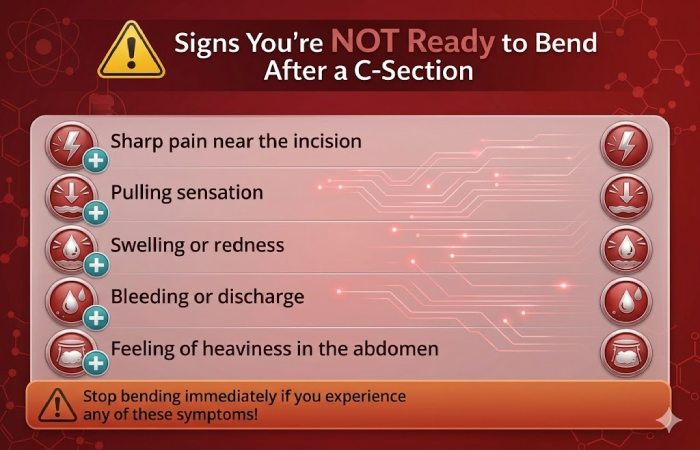
These are red flags, not normal signs of recovery.
Exercises That Help You Return to Bending Safely
| Exercise | When to Start | Benefit |
| Deep breathing | Day 1 | Improves circulation |
| Pelvic tilts | 2–3 weeks | Activates core |
| Walking | 1–2 weeks | Speeds healing |
| Light stretching | 4–6 weeks | Improves flexibility |
Avoid:
- Crunches
- Heavy lifting
- Yoga forward bends (early stage)
Abdominal Belt: Does It Help?
In India, abdominal binders are commonly used.
Pros:
- Supports incision
- Reduces pain
- Improves posture
Cons:
- Overdependence weakens muscles
- Incorrect use can increase pressure
Verdict:
Helpful only as support—not a substitute for healing.
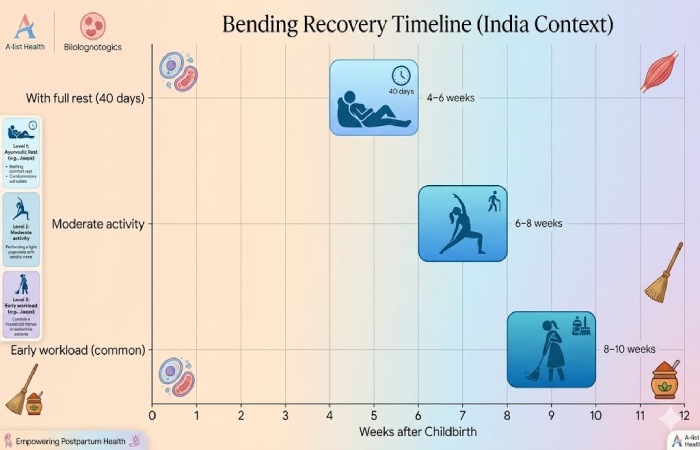
Recovery Timeline
Recovery is slower when rest is compromised—which is common in Indian households.
| Mother Type | Bending Timeline |
| With full rest (40 days) | 4–6 weeks |
| Moderate activity | 6–8 weeks |
| Early workload (common) | 8–10 weeks |
Final Verdict
Bending after a C-section should be guided by healing—not urgency. While light, supported bending may begin around 3–4 weeks, most women should wait until 6–8 weeks for safe, normal bending, ideally after a doctor’s clearance. Rushing this process—especially common in Indian households due to early return to chores—can lead to complications like wound strain, pain, or delayed recovery. A slower, mindful approach that prioritizes rest, proper movement techniques, and gradual strengthening will ensure a safer and more complete recovery in the long run.
FAQs
Can I bend to pick up my baby after a C-section?
Avoid bending at the waist. Use the squat method or ask for help in the first few weeks.
Is it okay to bend after 1 month?
Yes, but only light and controlled bending—not repetitive or heavy tasks.
When can I do yoga after a C-section?
Usually after 8 weeks, with doctor approval.
Can bending cause stitches to open?
Yes, especially in the first 2–4 weeks.